
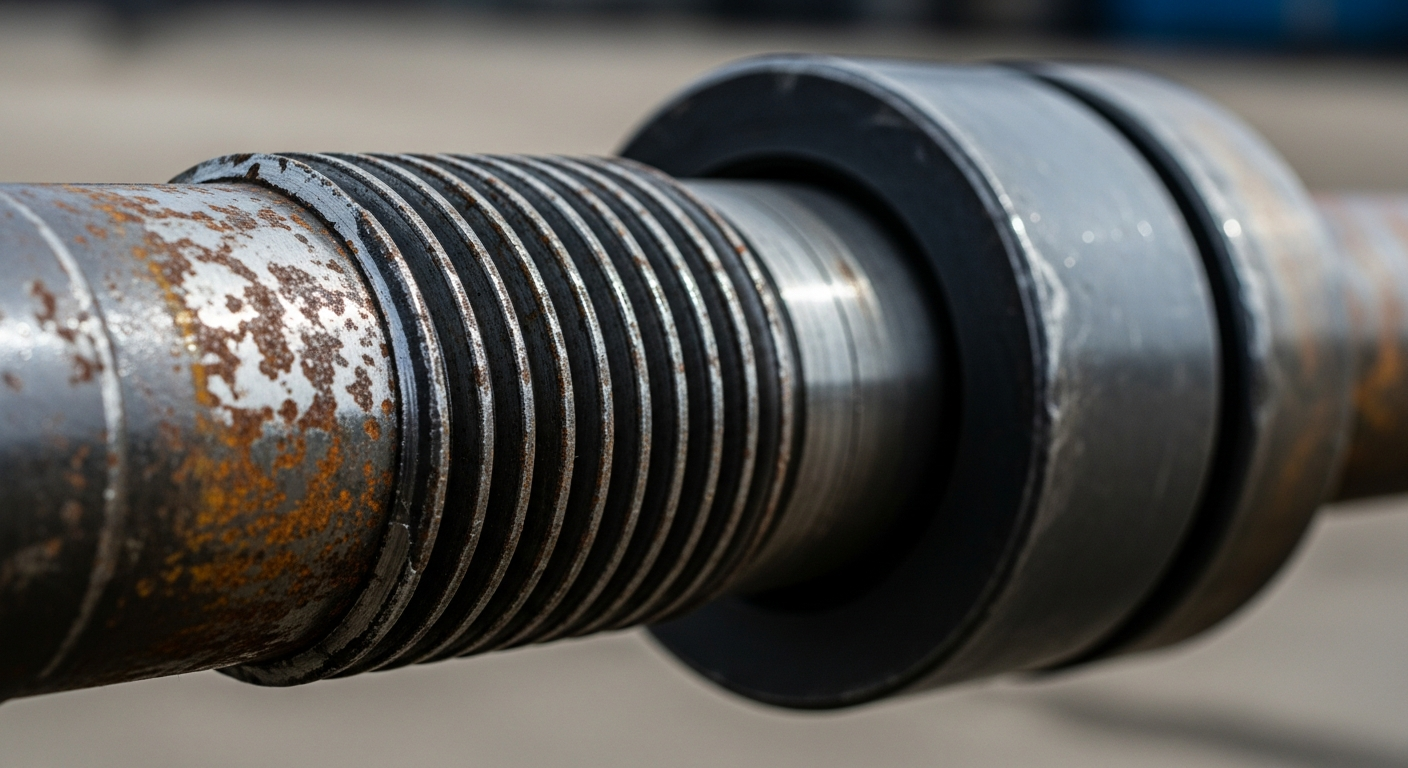
A combo steel rod string uses different rod grades at different positions in the string - higher-strength material where loads are highest, standard material where they are not. Compared to running premium steel top to bottom, it cuts cost. Compared to running standard steel throughout, it improves run life. The match between material and local stress is what makes the economics work.
Where the Loads Are
On the upstroke, the top of the rod string carries the weight of everything below it plus the fluid column. Stress decreases with depth. On a 5,000 foot string, the top joint sees roughly twice the stress of a joint at 2,500 feet in a typical configuration.
On the downstroke, the compressive loads concentrate near the pump, especially in wells with any fluid pound tendency. So the bottom of the string is a compressive-stress zone even though the upstroke tension is lower there.
Matching Grades to Position
Class D or K (high-strength grades) at the top where upstroke tension is highest. Class D handles the load without needing a larger rod diameter, which lets you use lighter, smaller rods in the bulk of the string.
Class C or T (standard grades) in the middle where loads are moderate. Cost-efficient for the bulk of the string.
Sinker bars or heavy-weight rods at the bottom to keep the lower string in tension and resist buckling. Sometimes with rod guides for wear management in deviated sections.
When Combos Pay Off
Deep wells where the top of the string is at or near the limit of standard grade. Upgrading to D or K at the top extends run life without the cost of upgrading the whole string.
High-fluid-load wells where the same logic applies - concentrate the premium material where the concentrated stress is.
Wells with known top-of-string failure history. If the pattern is consistent failures in the top three joints, a combo with high-strength top section specifically addresses the pattern without over-specifying the rest.
When Not To
Shallow wells where loads are low throughout. No need for premium material anywhere.
Wells where bottom-end failures dominate. Putting better material at the top does nothing for bottom-end buckling or corrosion damage. Target the actual failure mode.
Bottom Line
Combo steel strings are a way to put expensive material only where the stress profile demands it. Done well, they cost less than a uniform premium string and run longer than a uniform standard one. Done poorly, they add design complexity without addressing the real failure mode. Match the material choice to the actual stress distribution and failure history.