
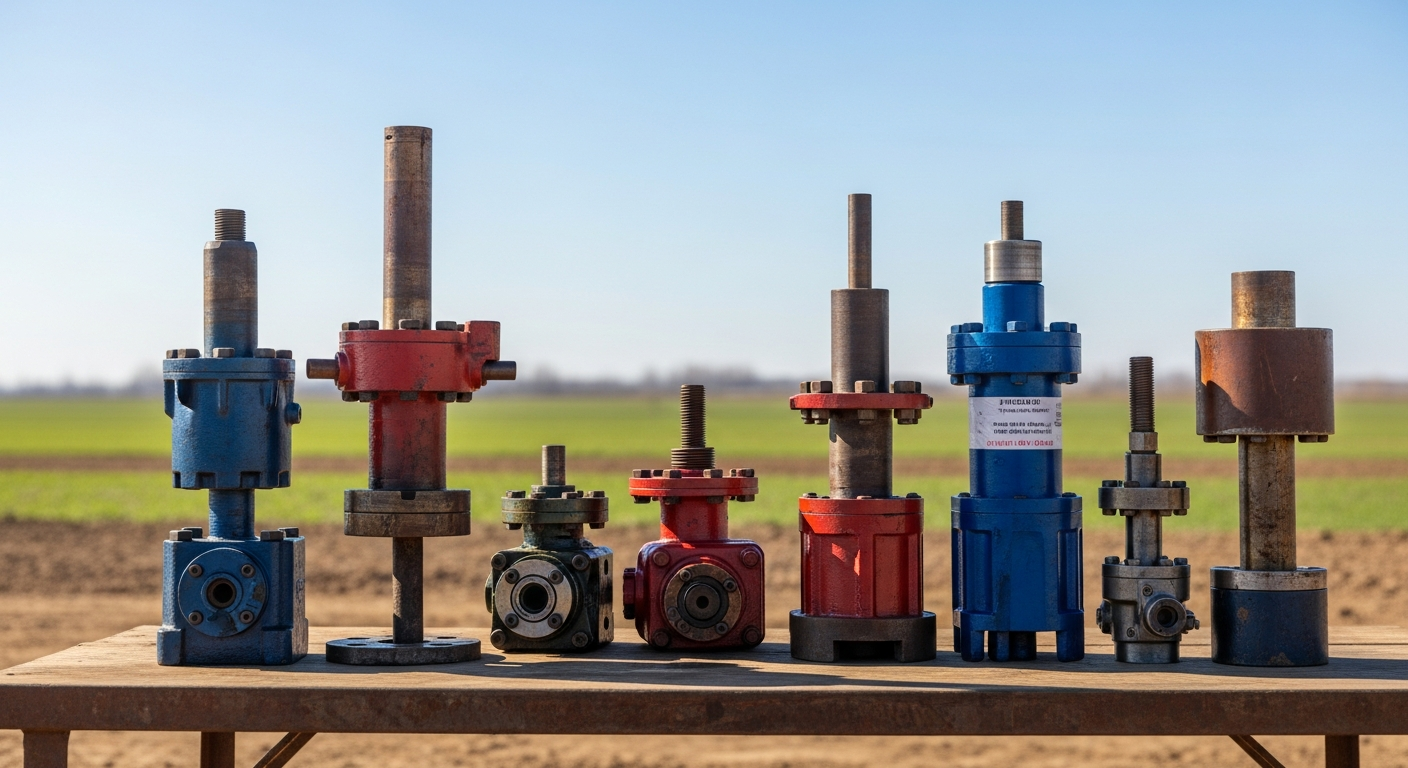
Pump selection gets treated as a default - "we use 1.5 inch tubing pumps here" - rather than as a decision. That works on wells that fit the default. On wells that don't, it costs run life and production. Getting pump selection right means matching construction, seating method, and valve design to the well's fluid, deviation, and operating pattern.
Insert vs Tubing Pumps
Tubing pumps are larger and higher-volume. The barrel is part of the tubing string, so pulling the pump means pulling the tubing. Right for high-volume, stable wells where pull frequency is low.
Insert pumps are smaller and run inside the tubing. Pull the rods to retrieve them - tubing stays in place. Right for most wells, especially those with frequent pump workovers, because the workover is faster and cheaper. Most rod-pumped wells run inserts.
Compression Ratio
Compression ratio is the ratio of volume swept on the downstroke to the gas chamber volume that remains. Higher compression clears more gas before the traveling valve stalls. In gassy wells this matters directly - a low-compression pump gas locks easily, a high-compression pump tolerates more free gas.
Compression ratio is a function of pump spacing and valve geometry. Adjustable by pump design choice and by how closely spaced the plunger is at the bottom of stroke.
Seat Type
Soft-seated valves (elastomer on metal) seal tight against small debris and handle slightly dirty fluid. Wear faster in clean, abrasive service.
Metal-seated valves (metal on metal) handle abrasives and higher temperatures. Can leak on fine particulates that prevent full closure. Typical in sand-producing wells.
Selection depends on fluid composition. Clean light oil favors soft seats. Heavy or sandy fluid favors metal. Some pumps use both - soft for the traveling valve, metal for the standing valve - to match each valve's service conditions.
Plunger Diameter
Matches displacement to inflow. Oversizing produces fluid pound. Undersizing leaves production in the ground. Rule of thumb: plunger sized for 30 to 50 percent more than expected current production to leave room for gas and for inflow variability, but not 200 percent more like the legacy "biggest pump that fits" approach.
Bottom Line
Pump selection is a decision involving construction type, seating, compression ratio, and plunger size. Each choice has a service envelope. Matching the envelope to the well costs a bit more engineering upfront and typically doubles or triples run life compared to defaulting. On mature fields, pump selection is often the highest-ROI design decision available.