
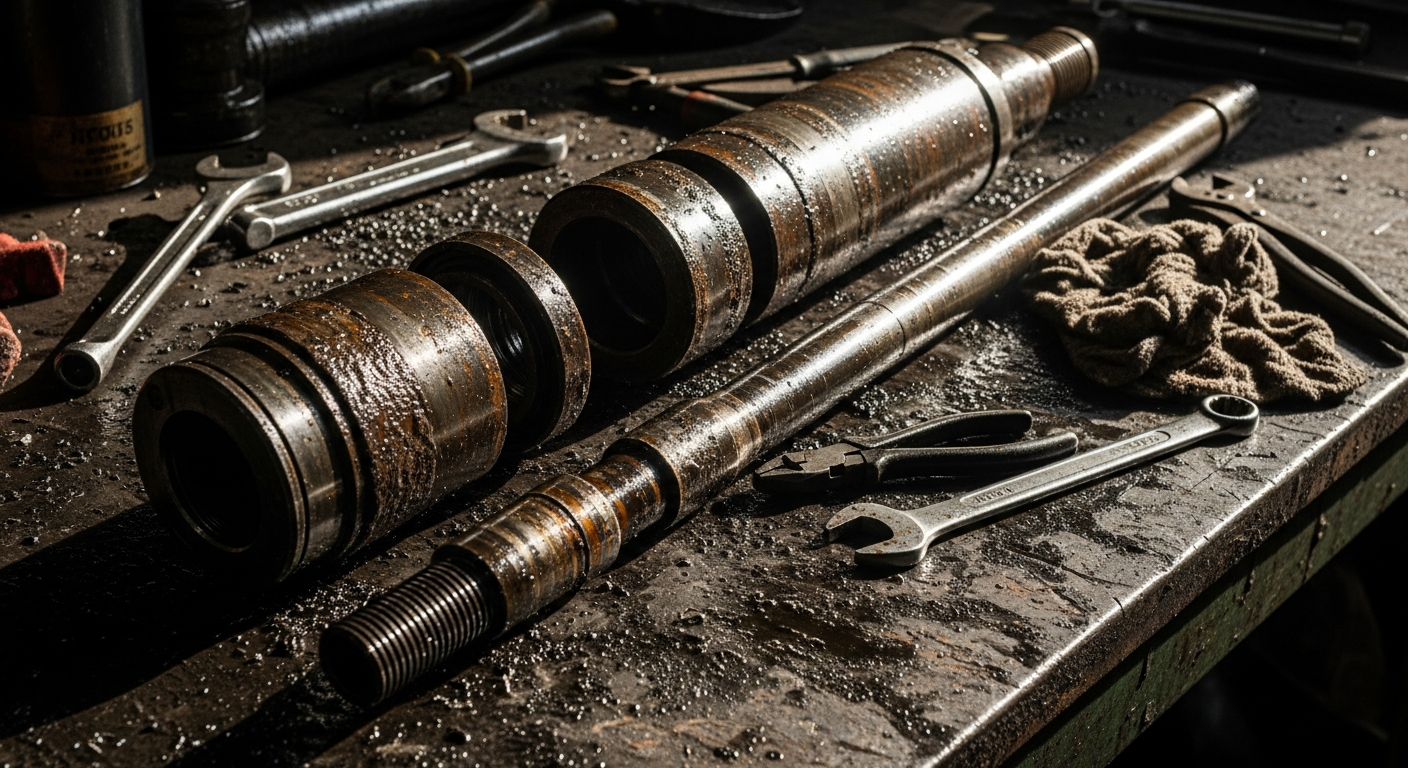
Pump barrels are deceptively simple. A stationary cylinder, a plunger running through it, tight clearance, two check valves. When a barrel fails, though, the cause is almost never the pressure it saw - it is what flowed through it. Solids, corrosive fluids, cavitation from fluid pound, or thermal cycling over time. The barrel is a sacrificial component, and the decisions that extend its life are upstream of the pump itself.
The Main Failure Modes
Abrasive wear from solids. Sand and scale cut grooves in the barrel wall as the plunger reciprocates. Clearance opens up. Slippage increases. Volumetric efficiency falls. This is the most common mode in sand-producing wells and the one where barrel metallurgy pays back fastest.
Corrosion. CO2 and H2S environments thin the barrel wall, pit the surface, and create stress concentrations. Chloride waters accelerate the process. A barrel designed for dry oil service does not survive long in high water cut with acid gas.
Cavitation damage. When fluid pound is chronic, the shock loading creates cavitation pits inside the barrel and on the plunger. These concentrate stress and accelerate failure. A barrel that should have lasted five years fails in one.
Plunger misalignment and side loading. In deviated wells, the plunger rides on one side of the barrel. Wear concentrates on a narrow strip. The barrel can fail in localized wear long before the rest of the wall shows significant loss.
Metallurgy and Coating Choices
Brass, carbon steel, stainless, chrome-plated - each has a service envelope. Chrome plating hardens the wear surface and resists abrasion but loses in sour gas service. Stainless resists corrosion but is softer and wears faster in sand. Brass is good for saltwater disposal and mildly corrosive service. The right choice is a function of fluid composition, sand content, and deviation - not a default.
Double-chrome or hardened inserts extend run life in abrasive service and often pay back on the first avoided workover. Carbon-fiber-lined barrels have entered the market for high-sand applications. The economics shift as abrasion dominates - if you are pulling for wear every six months, the premium material usually wins.
Design Decisions Upstream of the Pump
Gas separation. A properly sized gas separator above the pump intake keeps free gas out of the barrel. Less compression work, less slip, less cavitation. In gassy wells this is the single biggest decision.
Pump intake depth and rathole. Set the pump deep enough to maintain submergence but high enough to preserve rathole for fluid accumulation. Sand settles in the rathole instead of cycling through the pump.
Pump-off control. Chronic fluid pound destroys barrels through cavitation. Stopping the pound stops the cavitation. POC installation is often the fastest path to longer barrel life in wells running at low fillage.
Corrosion program. Inhibitor squeeze schedules, batch treatments, continuous injection - every option has a cost and an effectiveness window. Match the program to the fluid chemistry and monitor. Corrosion coupons in the production tubing give you a readable metric that is more honest than chemistry reports alone.
Diagnosing Barrel Wear Before Pull
Rising slippage on the downhole card. Lower volumetric efficiency than history shows for comparable fillage. Flat or rounded traveling valve transitions where they used to be sharp. These are the signatures of clearance opening up. Catching them before the pump quits entirely lets you plan the pull rather than react to a failure.
Bottom Line
Barrels fail from what runs through them and how the pump is operated. Metallurgy matters, but gas separation, pump-off control, and corrosion management matter more in most cases. The cheapest way to extend barrel run life is almost always upstream of the barrel itself.