
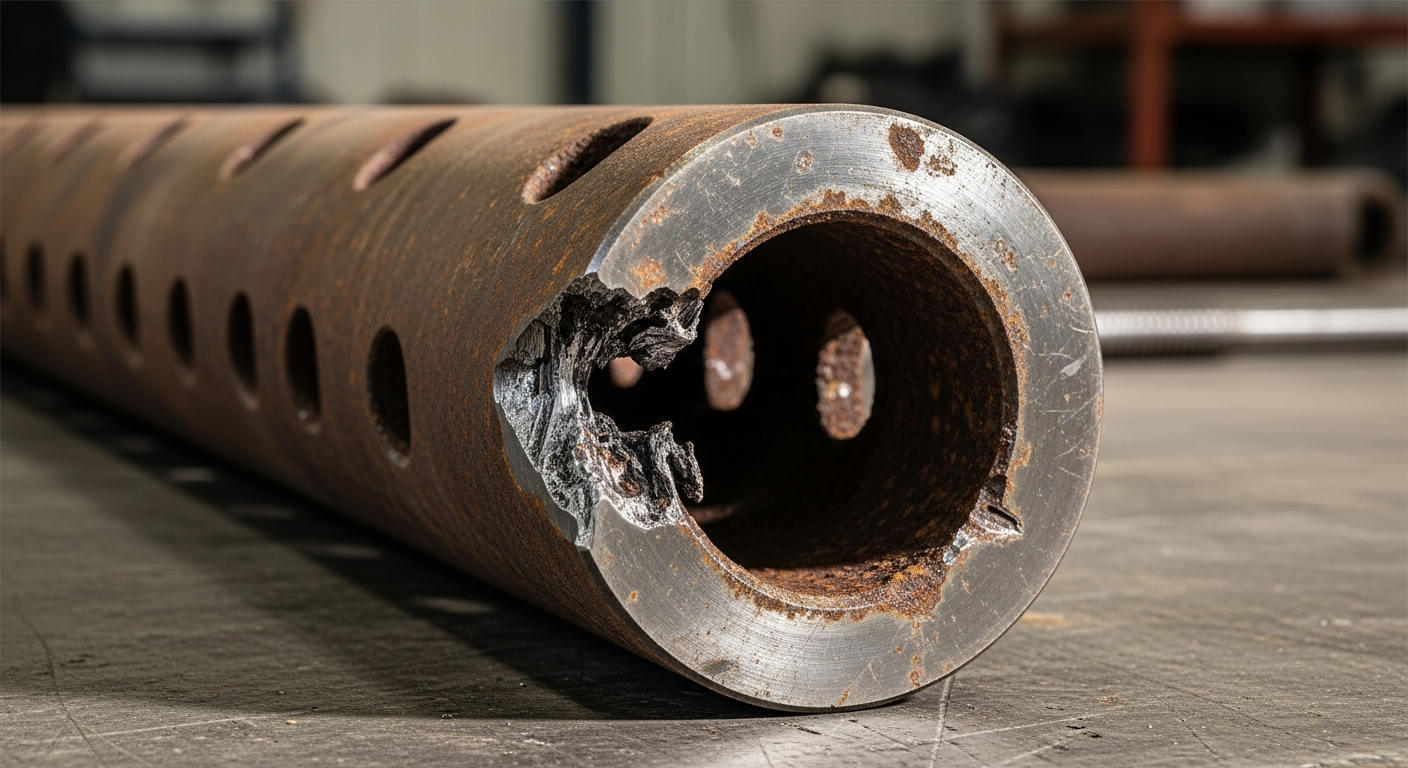
Tubing holes and leaks get misdiagnosed constantly. Production drops, someone runs a dynamometer card, card looks like gas interference or pump-off, treatment fails to fix the problem. The actual issue was a tubing hole above the pump dumping lifted fluid back down the annulus. Spotting it requires reading two measurements together.
What a Tubing Leak Looks Like
Production drops but the pump appears to be working. Surface dynamometer card can look normal or show reduced load pickup on the upstroke. Downhole pump card may still show reasonable fillage - the pump is moving fluid, it is just not reaching the surface. Fluid level in the annulus stays high or rises even with the pump running.
That last signal is the tell. If the pump runs continuously and the annular fluid level does not drop, fluid is going somewhere other than up the tubing to surface. A tubing hole above the pump is the most common explanation.
Distinguishing From Other Problems
Pump-off: annular level drops, card shows fluid pound shape. Gas interference: annular level stable or high, card shows rounded/banana shape with poor fillage. Tubing leak: annular level stable or rising, card can look deceptively normal, production still falls. The combined pattern - card looks okay, fluid level does not drop, production is off - is what narrows it down.
Quantifying the Leak
Run a pressure test on the tubing. Close the tubing at surface, pressurize it, watch for decay. A tight tubing holds pressure. A leaking one does not. Echometer casing/tubing pressure tools can often localize the leak within a few joints by measuring where the pressure communication occurs.
Compare actual fluid production to theoretical pump displacement. Theoretical = 0.1166 × plunger diameter squared × stroke × SPM. If pump is at 80 percent fillage by card and surface production is at 30 percent of theoretical, 50 percent of the fluid is disappearing somewhere between pump and surface. Tubing leak is the usual answer.
Common Locations
Threaded connections above the pump: most common, especially after years of rod-on-tubing contact has worn couplings thin. Wear patches where rod guides contact tubing in deviated wells: rod slap creates holes that leak fluid back down. Corrosion-induced pitting in high-water-cut wells: chronic thinning eventually perforates. Mechanical damage from rod unscrewing events or completions work.
Bottom Line
A tubing hole produces fluid loss without the usual pump-side symptoms. The combination of reasonable card, stable or rising annular fluid level, and production below theoretical displacement is the diagnostic signature. Pressure testing and echometer surveys confirm it. Spotting it saves time and cost that otherwise goes into chasing the wrong diagnosis.